

 Home
Home



Ethiopia's Trailer and Semi-Trailer Market: Growth Trends, Drivers, and Development Path
2025-08-30
In terms of market usage:
I. Light-duty Trailers account for 40% of the market, primarily used for agricultural product transportation (coffee, tea, maize, pulses) and rural-to-urban cargo movement, as well as short-distance distribution of consumer goods in urban areas (Addis Ababa, Dire Dawa);
II. Medium-duty trailers make up 35%, focusing on regional freight between major cities (Addis Ababa to Bahir Dar, Mekelle) and transportation of raw materials (cotton, leather) for the manufacturing sector;
III. Heavy-duty semi-trailers (25%) are mainly used for cross-border trade (with Djibouti, Kenya, Sudan) and bulk transport of construction materials (cement, steel) for infrastructure projects;
IV. Approximately 75% of operational trailers are imported, with 40% being second-hand units (aged 5-8 years). This mix reflects cost sensitivity among small transporters and growing demand for new, durable equipment in key sectors like manufacturing;
V. Key usage regions are concentrated in the central economic belt (Addis Ababa, Oromia Region), agricultural hubs (Sidamo, Jimma), and border trade zones (Dewele border with Djibouti, Moyale border with Kenya), with peak-season trailer utilization rates reaching 75% during coffee harvest (October-December).
I. Growth Drivers
A. Agricultural Export Revival: A Core Demand Pillar
Agriculture contributes 35% of Ethiopia’s GDP and employs 70% of its population, making it the primary driver of light-duty trailer demand:
I. Coffee exports: As Africa’s top coffee producer, Ethiopia’s coffee exports reached 180 million, while pulse exports (lentils, chickpeas) rose by 14% to $650 million, boosting demand for medium-duty trailers to transport bulk crops to processing facilities;
III. Food security projects: The government’s "Agricultural Transformation Program" increased maize production by 15% in 2023, requiring light-duty trailers to distribute grain to rural markets and reduce post-harvest losses.
B. Manufacturing Industrialization and Raw Material Transport
Ethiopia’s push for industrialization (focusing on textiles, leather, and food processing) has created steady demand for medium-duty trailers:
I. Textile sector growth: The country’s textile exports reached $500 million in 2023, a 22% increase, driving demand for medium-duty trailers to transport raw cotton from western farms to eastern textile parks (Bole Lemi, Hawassa);
II. Leather industry expansion: Leather and leather product exports grew by 17% in 2023, requiring specialized medium-duty trailers with waterproof covers to transport raw hides from northern cattle-raising areas to Addis Ababa’s tanneries;
III. Food processing: New sugar and edible oil processing plants (built under the government’s "Industrial Park Development Program") increased demand for medium-duty trailers to transport sugarcane and oilseeds, with this segment growing by 19% annually since 2022.
C. Cross-Border Trade and Port Logistics Dependency
As a landlocked country, Ethiopia relies heavily on neighboring ports (Djibouti’s Port of Doraleh, Port of Berbera in Somalia) for international trade, driving heavy-duty trailer demand:
I. Trade with Djibouti: Over 90% of Ethiopia’s import-export cargo passes through Djibouti’s ports, with 2023 trade volume reaching 1.2 billion, while trade with Sudan (focused on grains and construction materials) increased by 12%, both driving demand for reliable heavy-duty semi-trailers;
III. Logistics corridor upgrades: The completion of the Addis Ababa-Djibouti Railway’s freight expansion in 2023 reduced road freight pressure but still left 60% of cargo dependent on road transport, sustaining heavy-duty trailer demand.
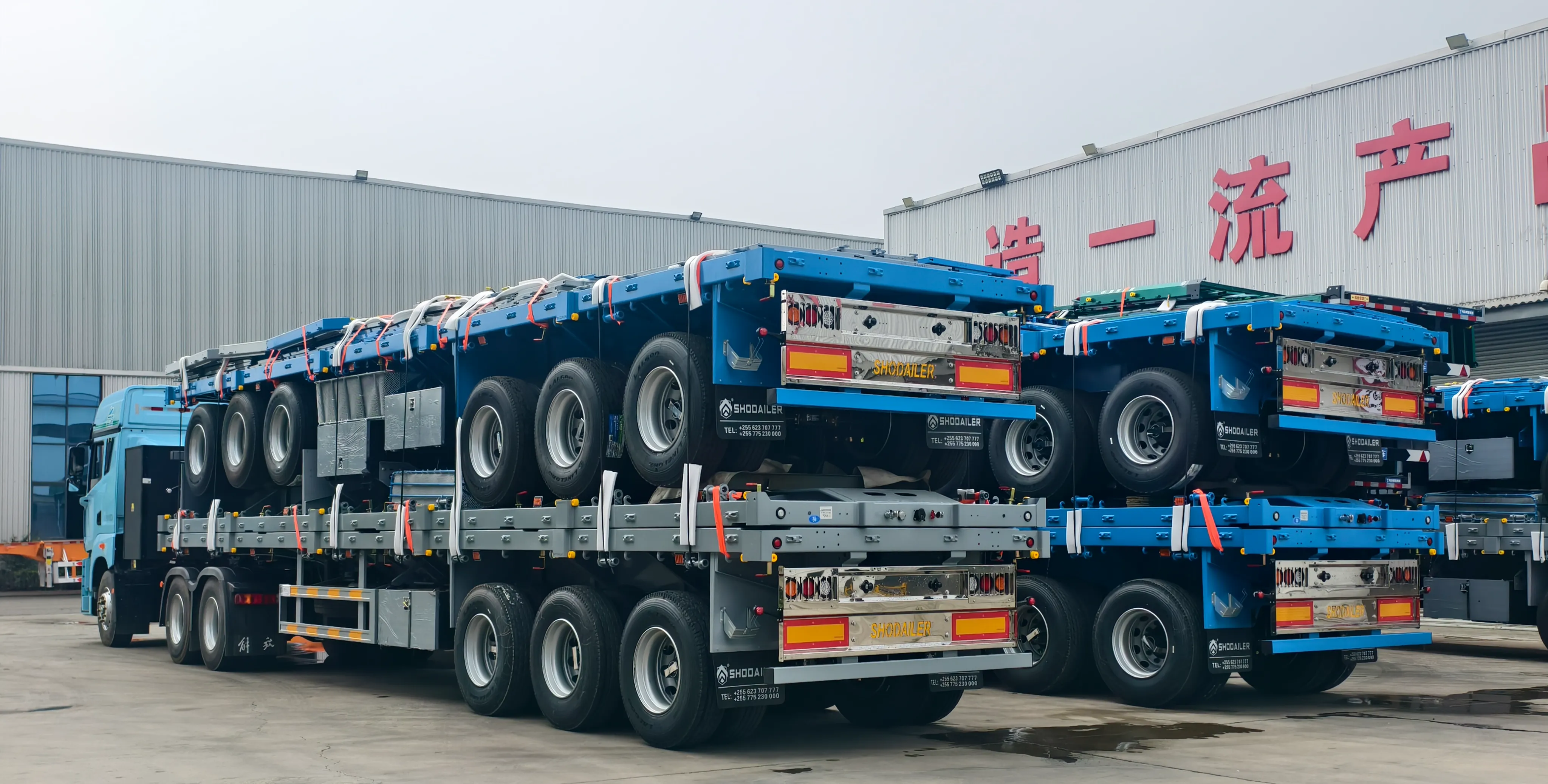
Our company, a global provider of durable, terrain-adapted trailers, aligns perfectly with Ethiopia’s market needs. With decades of R&D experience, a 30+ member technical team, and advanced production lines, our trailers are engineered to withstand Ethiopia’s diverse conditions—from mountainous roads in the north to rural dirt paths in the south. Our fence-type semi-trailers, ideal for agricultural and general cargo transport, are designed for easy maintenance and heavy-load resilience, making them suitable for local operational needs. Explore more at https://www.shodailer.com/fence-type-semi-trailer/.
II. Commitment to Regulatory Compliance
We recognize the importance of adhering to Ethiopia’s import regulations and industry standards (overseen by the Ethiopian Revenue Authority, ERA, and the Ethiopian Transport Authority, ETA). Our company is fully committed to cooperating with local authorities, logistics enterprises, and clients to ensure smooth market access, including:
- Providing complete technical documentation (manufacturer certificates, quality test reports) and international certifications (ISO9001, 3C) to meet ERA’s import requirements and ETA’s roadworthiness standards;
- Offering tailored modifications to adapt to local conditions, such as reinforced suspensions for mountainous roads, dust-proof cargo covers for dry regions, and simplified electrical systems to reduce maintenance complexity;
- Assisting with import clearance and customs coordination (in partnership with local logistics firms) to navigate Ethiopia’s import procedures and minimize delivery delays.
For cross-border container transport and bulk construction material movement, our skeleton semi-trailers deliver exceptional reliability and efficiency, even in long-haul scenarios. Learn more at https://www.shodailer.com/skeleton-semi-trailer/.
III. Challenges and Development Paths
A. Key Market Challenges
I. Infrastructure limitations: Only 20% of Ethiopia’s roads are paved, with rural and mountainous areas relying on unpaved tracks that deteriorate during the rainy season (June-September). This leads to high trailer wear, frequent breakdowns, and average annual downtime of 50 days;
II. Import and financing barriers: New heavy-duty semi-trailers cost 55,000, while light-duty trailers range from 25,000. High import tariffs (15-20%) and limited access to low-interest loans force 60% of small transporters to use aging second-hand trailers, increasing maintenance costs;
III. Skill shortages: There are fewer than 10 professional trailer repair centers nationwide (concentrated in Addis Ababa and Dire Dawa), and most mechanics lack training in modern trailer systems (e.g., electronic braking, hydraulic lifts), leading to prolonged repair times;
IV. Fuel price volatility: Frequent fuel price hikes (up 25% in 2023) increase operational costs for trailer operators, reducing their ability to invest in new equipment.
B. Solutions and Industry Initiatives
I. Government and international support: The Ethiopian government, in partnership with the World Bank and African Development Bank, launched a "Logistics Equipment Support Program" in 2023, offering 30% subsidies for SMEs purchasing new trailers and 7% interest rate loans for fleet upgrades. Additionally, the government reduced import tariffs on trailer spare parts from 15% to 5%;
II. Skill development programs: The Ethiopian Logistics Association (ELA), in collaboration with international manufacturers, trained 100 local mechanics in 2023, focusing on trailer maintenance, brake system repair, and emergency troubleshooting;
III. Our company’s local support: We provide simplified maintenance guides, remote technical support via phone and email, and spare parts kits (containing high-wear components like tires, brake pads, and bearings) through local partners in Addis Ababa, reducing maintenance delays by 35%;
IV. Fuel-efficient designs: Our trailers incorporate lightweight materials (reducing fuel consumption by 10-15%) to help operators mitigate the impact of fuel price volatility, aligning with Ethiopia’s focus on cost-saving logistics solutions.
Ethiopia Trailer Market 2025 Outlook: Industrialization and Trade Growth
By 2025, Ethiopia’s trailer market is projected to grow to Ethiopian birr x, with an 11% compound annual growth rate (CAGR). This growth will be driven by continued agricultural export expansion, manufacturing industrialization, and infrastructure development. Key trends include:
IV. Demand Growth Drivers
A. Agricultural Exports to Scale Further
I. Coffee exports are expected to reach $1.6 billion by 2025, driving demand for 220+ light-duty covered trailers;
II. The government’s plan to expand tea cultivation by 20% will boost demand for 80+ additional medium-duty trailers for tea transport;
III. Pulse exports are projected to grow by 18%, requiring 100+ light-duty trailers to handle increased volumes.
B. Manufacturing Sector Expansion
I. New textile parks (planned in Amhara and Tigray Regions) will increase cotton transport demand by 25%, driving 150+ medium-duty Trailer Purchases;
II. The leather industry’s target to double exports by 2025 will require 70+ specialized medium-duty trailers with climate-controlled features;
III. Food processing plants (sugar, edible oil) will expand, increasing demand for medium-duty trailers by 20%.
C. Cross-Border Trade and Infrastructure Upgrades
I. The completion of the Addis Ababa-Moyale Highway upgrade (2024) will improve trade with Kenya, boosting heavy-duty semi-trailer demand by 30%;
II. The expansion of Djibouti’s Port of Doraleh (scheduled for 2024) will increase cargo throughput by 40%, driving demand for 180+ heavy-duty container semi-trailers;
III. The government’s "Road Sector Development Program" (targeting 10,000km of new paved roads by 2025) will improve road conditions, increasing trailer utilization rates by 15%.
V. Technological Upgrades and Market Evolution
I. Durability-focused designs: Trailers with reinforced frames, all-terrain tires, and corrosion-resistant coatings will become mainstream, as operators prioritize equipment that can withstand Ethiopia’s diverse terrains;
II. Basic digitalization: By 2025, 30% of large logistics companies will equip trailers with GPS tracking systems to optimize routes and reduce cargo loss (currently 7%), supported by the government’s "Digital Logistics Initiative";
III. Localized assembly: Joint ventures between Ethiopian enterprises and foreign manufacturers will begin assembling trailer components locally by 2025, cutting import costs by 18% and improving after-sales support.
VI. Building a Sustainable Logistics Ecosystem
I. Financial inclusion: Banks will launch "trailer lease-purchase" plans with 5-year flexible terms, allowing 45% more SMEs to access new equipment by 2025;
II. Maintenance network expansion: 6 new regional repair centers will open by 2025 (covering Bahir Dar, Mekelle, and Hawassa), supported by government funding, reducing average maintenance response time from 60 hours (2023) to 24 hours;
III. Green logistics incentives: The government will introduce tax breaks for fuel-efficient trailers, encouraging 25% of new purchases to adopt eco-friendly designs by 2025.
Future Outlook
Ethiopia’s trailer market is transitioning from "agricultural-focused transport" to "industrial and trade-driven logistics," leveraging its growing manufacturing sector and strategic position in East African trade. While challenges like infrastructure gaps and fuel volatility remain, sustained government support, industrialization, and export growth will drive steady demand. Over the next five years, the market will play a pivotal role in Ethiopia’s economic diversification, supporting rural livelihoods, manufacturing expansion, and cross-border connectivity.
For tailored trailer solutions that meet Ethiopia’s agricultural, manufacturing, and cross-border logistics needs, contact us:
I. Explore our products: https://www.shodailer.com/fence-type-semi-trailer/ (agricultural/general cargo) and https://www.shodailer.com/skeleton-semi-trailer/ (cross-border/container transport)
II. Call or WhatsApp: +86 19015490301
We are dedicated to supporting Ethiopia’s logistics growth with reliable, durable, and locally adaptable trailer solutions!