

 Home
Home



Global Semi - Trailer Market Set for Substantial Growth by 2033
The growing use of multiple transportation modes, often referred to as multimodal transportation, is also fueling the market. Semi - Trailers can be easily transferred between trucks, trains, and ships, enabling seamless movement of goods across different terrains and regions. For example, a semi - trailer loaded with goods in a manufacturing hub can be transported by truck to a railway station, then loaded onto a train for long - distance transport, and finally, transferred back to a truck for local delivery.
Technological advancements are another significant factor. The introduction of smart trailers with the integration of Internet of Things (IoT) and telematics has revolutionized the semi - trailer industry. These smart trailers can provide real - time data on the location of the cargo, its condition (such as temperature for refrigerated trailers), and the status of the trailer itself, like tire pressure and brake wear. This not only improves the efficiency of transportation but also enhances the security of the goods being transported.
[Insert an image here of a modern semi - trailer with IoT sensors and telematics devices, showing data being transmitted to a control center]
By type, the dry van segment dominated the global semi - trailer market in 2023. These trailers are designed to protect cargo from weather elements such as rain, snow, and wind. They are extensively used for transporting a wide range of retail goods. Their versatility and ability to keep the cargo dry and safe make them a popular choice among shippers.
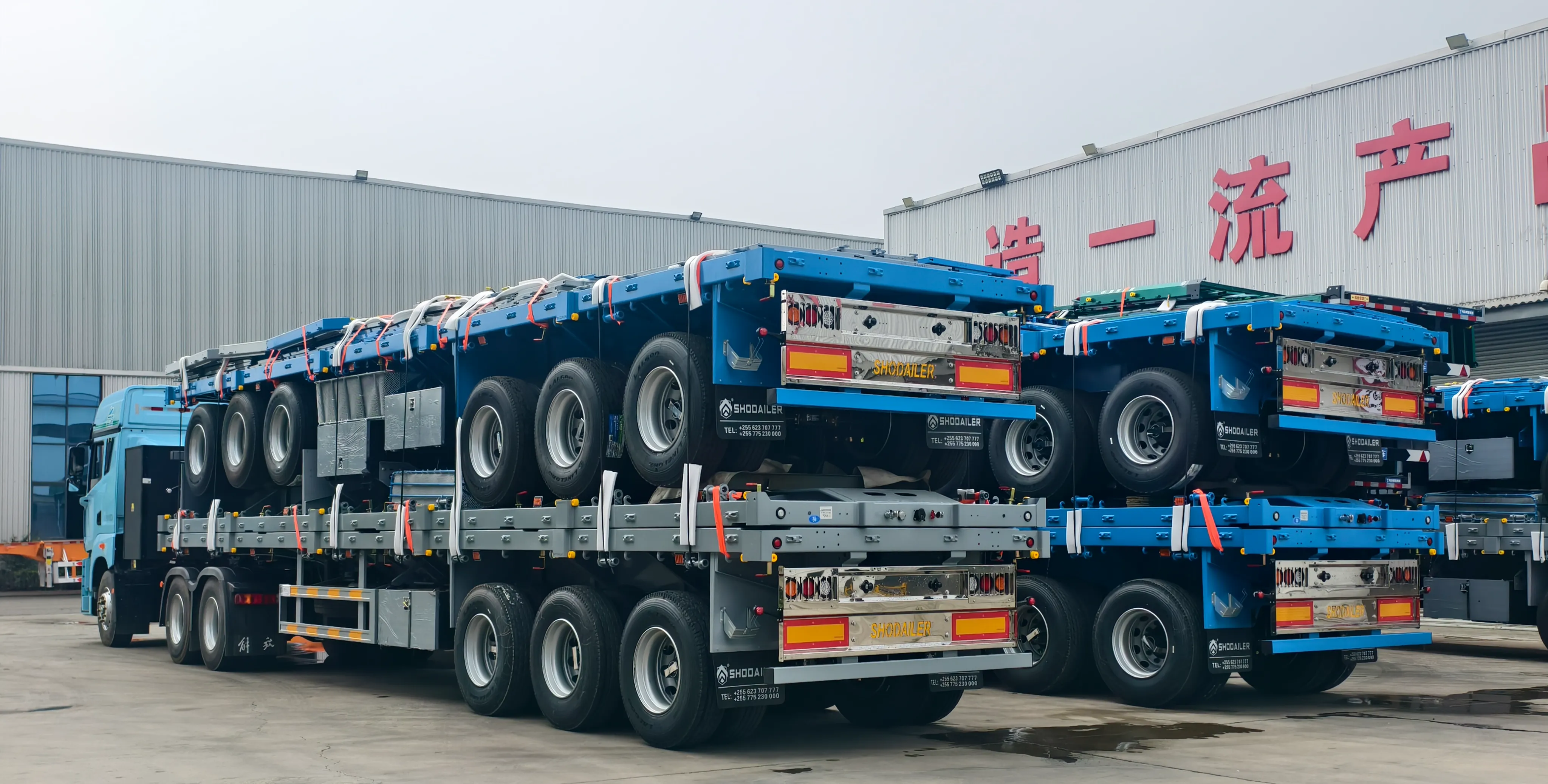
In terms of the number of axles, the 3 - to - 4 - axles segment held the largest market share in 2023. Trailers with this axle configuration can carry substantial loads over both short and long distances, making them suitable for various industries, including manufacturing, construction, and agriculture. They are often used to transport industrial goods, heavy machinery, building materials, and agricultural products. The additional axles provide greater stability and load - bearing capacity.
The market is also witnessing a surge in investment in green technologies and sustainable practices. As environmental concerns grow, manufacturers are developing semi - trailers that are more fuel - efficient and produce fewer emissions. This includes the use of lightweight materials to reduce the overall weight of the trailer, which in turn improves fuel economy, and the adoption of alternative fuels such as electric or hydrogen - powered systems.
However, the industry also faces challenges. Stricter regulations regarding emissions and safety are being imposed in many regions. Semi - Trailer Manufacturers and operators need to ensure that their vehicles comply with these regulations, which may require significant investment in new technologies and equipment.
Despite these challenges, the future of the global semi - trailer market looks promising. With continuous technological innovation, growing e - commerce, and the expansion of multimodal transportation, the market is expected to continue its growth in the coming years.
