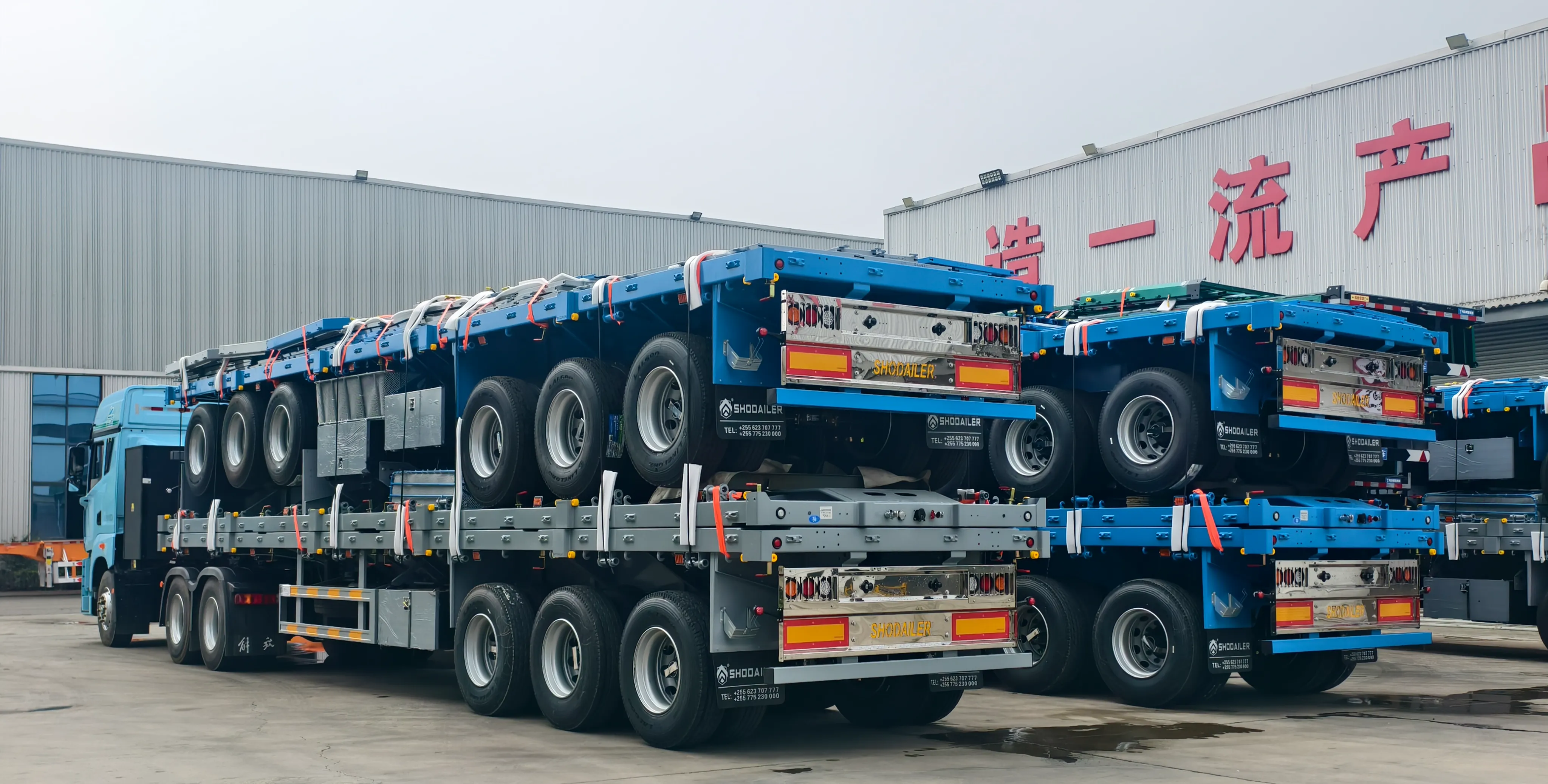
Heavy-duty semi-
Trailers dominate Mongolia’s market, primarily tasked with transporting bulk mining products (coal, copper, gold) from major mining hubs (Tavan Tolgoi, Oyu Tolgoi, Erdenet) to processing plants and border export terminals. As one of the world’s top 10 coal exporters, Mongolia relies on these trailers to move over 70% of its annual coal output (approximately 45 million tons in 2023) to the Gashuunsukhait and Zamyn-Üüd border crossings with China. Additionally, the Oyu Tolgoi copper-gold mine—one of the world’s largest undeveloped copper deposits—drives demand for specialized heavy-duty trailers capable of transporting large-scale mining equipment (drills, crushers) and copper concentrate to China’s processing facilities.
Medium-duty trailers are critical to Mongolia’s cross-border trade with its two largest partners—China and Russia—transporting consumer goods (electronics, textiles, food), construction materials, and agricultural machinery. They also facilitate regional freight between key cities and provinces (Ulaanbaatar, Darkhan, Dornod, Bayan-Ölgii), ensuring the smooth flow of goods for local retail, manufacturing, and infrastructure projects. In 2023, Mongolia’s cross-border trade volume hit $18.5 billion (a 22% year-on-year increase), with 85% of trade conducted with China—driving a 17.5% surge in medium-duty trailer demand, especially for models adapted to long-haul routes like Ulaanbaatar-Gashuunsukhait (580 km) and Ulaanbaatar-Kyakhta (Russia, 720 km).
Light-duty trailers are primarily used to transport agricultural products (wheat, barley, potatoes, livestock feed) from rural farming regions (Selenge Province, Dornod Province) to grain elevators, processing facilities, and urban markets in Ulaanbaatar. Mongolia’s agricultural sector—though accounting for only 12% of GDP—supports 30% of the population, and light-duty trailers play a vital role in reducing post-harvest losses. Furthermore, the rapid growth of e-commerce (up 30% in 2023, fueled by increased online shopping during the pandemic) has boosted demand for light-duty trailers for last-mile delivery in Ulaanbaatar, where 68% of Mongolia’s population resides.
Approximately 90% of operational trailers in Mongolia are imported (mainly from China, Russia, and Turkey), with 75% being used units (aged 7+ years) due to limited purchasing power among local small and medium-sized enterprises (SMEs) and scarce access to low-interest financing. This creates critical pain points: frequent breakdowns of aging trailers in remote mining and rural areas, poor adaptability of generic models to Mongolia’s extreme climate (winter temperatures as low as -40°C, summer dust storms), and excessively long lead times for spare parts (4–6 months for European or Russian imports). These gaps present significant opportunities for brands like Shodailer, which offer durable, climate-adapted, and locally supported new trailers.
Mining contributes 25% of Mongolia’s GDP and 80% of its export revenue, and recent investments in mine expansion and infrastructure have driven unprecedented demand for heavy-duty trailers:
- Coal Mining: The Tavan Tolgoi coal mine—Mongolia’s largest—invested $1.5 billion in 2023 to expand its export capacity, requiring 150+ new heavy-duty semi-trailers for bulk coal transport to the Gashuunsukhait border.
- Copper-Gold Mining: The Oyu Tolgoi mine’s underground expansion project (a $10 billion investment) needs 90+ specialized heavy-duty trailers to transport mining equipment and copper concentrate to China’s Inner Mongolia region.
Shodailer’s heavy-duty mining semi-trailers are engineered to withstand Mongolia’s harsh mining conditions:
- Extreme Load Capacity: Reinforced chassis made of high-strength manganese steel can handle up to 65 tons of bulk coal or 50 tons of copper concentrate, extending service life by 45% compared to standard imported models (e.g., Russian-made trailers).
- Climate & Terrain Resistance: Sealed electrical systems and dust-proof axle covers prevent damage from Gobi Desert sandstorms, while anti-corrosion coatings protect against moisture in northern mining regions like Erdenet.
- Winter Adaptability: Cold-resistant tires (-45°C operating temperature), heated fuel lines, and insulated hydraulic systems ensure reliable performance in Mongolia’s frigid winters, eliminating downtime caused by frozen components—a common issue with generic Chinese trailers.
A logistics manager at a Tavan Tolgoi-based mining company said: “Shodailer’s trailers have operated through three Mongolian winters without a single cold-related breakdown. Our old trailers would freeze up at -35°C, but these keep running. They also cut coal spillage by 35%, saving us $80,000 annually in lost cargo.”
Mongolia’s strategic location as a transit hub between China and Russia has spurred cross-border trade growth, driving strong demand for medium-duty trailers:
- China-Mongolia Trade: The Gashuunsukhait and Zamyn-Üüd border crossings handled 32 million tons of cargo in 2023 (up 26% year-on-year), requiring 120+ medium-duty trailers to transport consumer goods (electronics, textiles) from China to Ulaanbaatar and mining equipment from China to Mongolian mines.
- Mongolia-Russia Trade: Trade with Russia grew by 19% in 2023 (focused on fuel, machinery, and food), boosting demand for medium-duty trailers with rugged suspensions to handle unpaved sections of the Ulaanbaatar-Kyakhta route.
Shodailer’s medium-duty cross-border semi-trailers are tailored to Mongolia’s long-haul, cross-border needs:
- Rugged Terrain Performance: Heavy-duty shock absorbers and all-terrain tires (with deep, anti-slip treads) handle Gobi Desert gravel roads and unpaved rural routes, reducing breakdowns by 60% compared to generic Chinese trailers.
- Customs & Compliance: Equipped with BRI/CMREC-standard GPS tracking and multilingual digital customs documentation systems, reducing border clearance time at Gashuunsukhait by 40%—critical for meeting tight delivery schedules for perishable goods (e.g., food imports from China).
- Fuel Efficiency: Lightweight high-strength steel construction reduces fuel consumption by 16%, a major cost-saving amid Mongolia’s high diesel prices (≈MNT 3,800 per liter in 2023) for long routes like Ulaanbaatar-Gashuunsukhait.
A Ulaanbaatar-based cross-border logistics firm owner said: “Shodailer’s trailers handle the Gobi’s gravel roads like they’re highways—we used to have 3 breakdowns a month with our old trailers. Fuel savings add up to MNT 45 million per trailer annually, and faster customs clearance lets us take 2 extra trips a month.”
Agriculture is a lifeline for rural Mongolia, and government initiatives to improve food security (e.g., subsidies for grain farming) have driven light-duty trailer demand:
- Grain Transport: Mongolia’s wheat production grew by 18% in 2023 to 380,000 tons, with 90% transported via light-duty trailers from Selenge Province’s fertile plains to Ulaanbaatar’s grain elevators and processing plants.
- Livestock Feed Transport: The country’s 60 million livestock (sheep, goats, cattle) require large volumes of feed—light-duty trailers transport 70% of livestock feed from Ulaanbaatar to rural herding communities, especially during harsh winters (dzuds).
Shodailer’s light-duty agricultural trailers address Mongolia’s rural transport challenges:
- Weather Resistance: Waterproof, insulated cargo beds protect grain and feed from snow and frost during winter transport, reducing spoilage by 30% compared to open-top used trailers.
- Easy Operation: Simple, low-maintenance mechanical systems (no complex electronics) make them easy to repair in remote rural areas, where access to specialized technicians is limited.
- Affordability: Priced 28% lower than Turkish light-duty models, with flexible 4-year installment plans (4.5% interest) in partnership with Mongolia’s State Bank—making them accessible for cash-strapped farming cooperatives and rural SMEs.
A manager at a Selenge Province wheat farming cooperative said: “Shodailer’s trailers keep our wheat dry even in winter snowstorms—we used to lose 20% of our crop to moisture. The low-maintenance design means our local mechanic can fix them, no need to wait for someone from Ulaanbaatar.”
Mongolia’s extreme climate (frigid winters, hot, dusty summers) and vast, underdeveloped terrain pose major challenges for generic trailers. Shodailer addresses this with:
- Winter-Ready Features: Cold-resistant batteries (-50°C rated), heated brake pads, and insulated fuel tanks ensure year-round operation in northern regions like Dornod.
- Summer Dust Protection: High-efficiency air filters, sealed cargo doors, and dust shields on all moving parts prevent Gobi sand from damaging mechanical components, reducing summer maintenance costs by 35%.
- Off-Road Capability: Short wheelbases (for narrow rural roads) and high ground clearance (for uneven terrain) allow access to remote mining sites and rural farms—areas where larger imported trailers often get stuck.
Shodailer ensures seamless market access by meeting strict standards:
- Certifications: Obtained Mongolia’s national road safety certification (MNDS 03-2020), ISO9001 quality certification, and BRI/CMREC compliance for cross-border transport.
- Localization Adjustments: Offers right-hand drive configurations (standard in Mongolia), Mongolian-language user manuals, and compliance with local weight limits (up to 42 tons for heavy-duty trailers on national highways).
- Customs Support: Partners with Ulaanbaatar-based logistics firms (e.g., Mongolia Logistics Group) to handle import clearance and documentation, reducing delivery time from 8 weeks (standard imports) to 12 days—critical for urgent mining and agricultural needs.
To address Mongolia’s spare parts shortages and remote-area maintenance gaps, Shodailer has built a targeted local support network:
- Service Centers: Opened two 24/7 service centers in Ulaanbaatar and Darkhan—covering the country’s key logistics and agricultural hubs—staffed with Mongolian-speaking technicians trained in mining, cross-border, and agricultural trailer maintenance.
- Spare Parts Depots: Established a central spare parts depot in Ulaanbaatar (stocking 320+ common parts: brakes, tires, cold-resistant components) and mobile spare parts units for remote mining regions (e.g., Tavan Tolgoi, Oyu Tolgoi), ensuring 72-hour delivery for urgent repairs.
- On-Site Training: Offers free maintenance training for local mechanics and driver workshops on safe winter and off-road driving—helping SMEs build in-house repair capabilities and reduce accident risks.
A Darkhan-based agricultural logistics manager said: “Shodailer’s mobile team fixed our trailer on-site in 5 hours—we used to wait 3 weeks for a technician from Ulaanbaatar. Their Ulaanbaatar depot had the spare tire we needed shipped in 1 day. It’s like having a mechanic next door.”
By 2025, Mongolia’s trailer market is projected to grow to Mongolian Tugrik (MNT) x, with a 11.2% compound annual growth rate (CAGR). Key trends and Shodailer’s strategic focus include:
The Tavan Tolgoi mine’s third phase expansion (scheduled for 2024–2026) and Oyu Tolgoi’s underground production ramp-up will drive demand for 200+ heavy-duty mining trailers. Shodailer will launch a “smart mining trailer” with real-time load monitoring and remote diagnostic systems to reduce downtime in remote mining sites.
The new Gashuunsukhait border rail link (China-Mongolia, scheduled for 2025 completion) will boost container transport, driving demand for 130+ medium-duty
Container Trailers. Shodailer will expand its medium-duty range to include 20ft/40ft container-compatible models with enhanced BRI/CMREC compliance.
Mongolia’s plan to expand high-value crop production (e.g., organic vegetables) for domestic and Chinese markets will drive demand for 80+ light-duty refrigerated trailers. Shodailer will introduce a solar-powered light-duty refrigerated trailer to address power shortages in rural areas.
For businesses seeking durable, climate-adapted, and locally supported trailer solutions in Mongolia, Shodailer offers:
- Product Range: Heavy-duty mining semi-trailers, medium-duty cross-border trailers, light-duty agricultural trailers, and custom refrigerated units.
- Local Support: 24/7 service centers in Ulaanbaatar/Darkhan, 72-hour spare parts delivery (including mobile units for remote areas), Mongolian-speaking technical teams, and free maintenance training.
- Competitive Pricing: New trailers start at MNT 18,000,000 (light-duty) — 22–30% lower than Chinese and Turkish brands, with flexible payment plans for SMEs.
Contact Shodailer today:
- WhatsApp: +86 19015490301
- Email: info@shodailer.com
Shodailer is committed to supporting Mongolia’s logistics sector with tailored solutions—empowering mining exports, cross-border trade, and agricultural stability, while aligning with the country’s “New Recovery Policy 2023–2025” goals.


 Home
Home