

 Home
Home



Semi-Trailer Market Analysis: Current Situation and Future Trends
1. Market Overview
The semi-Trailer market has been an essential part of the global freight transportation industry. Semi-trailers, which are towed by tractors, come in various types, including flatbed, dry van, refrigerated, tanker, and more. They play a crucial role in transporting a wide range of goods, from general cargo to specialized and perishable items.
2. Current Market Situation
2.1 Market Size and Growth
The global semi-trailer market has shown steady growth in recent years. In 2024, the market size was valued at approximately USD 36.58 billion. It is projected to reach USD 56.44 billion by 2032, with a compound annual growth rate (CAGR) of 5.57% from 2025 to 2032. This growth is driven by multiple factors.
2.2 Regional Analysis
North America: North America has been a significant market for semi-trailers. The United States, in particular, has a large demand due to its well-developed logistics and e-commerce sectors. The region's extensive road network and high volume of freight transportation contribute to the continuous need for semi-trailers. For example, the growth of online retail has led to an increased demand for dry van and refrigerated semi-trailers to handle the transportation of consumer goods and perishable items.
Europe: Europe is another major market. Countries like Germany, Italy, and the Netherlands are key players. Stringent regulations regarding emissions and vehicle safety in Europe have led to the development of more advanced and environmentally friendly semi-trailers. For instance, the EU's requirements for reducing carbon emissions have spurred the adoption of lightweight materials and more fuel-efficient technologies in semi-trailer manufacturing.
Asia-Pacific: Asia-Pacific is emerging as a rapidly growing market. China, with its booming economy, large-scale infrastructure projects, and expanding e-commerce industry, is a major driver of the semi-trailer market in the region. The growth of industrialization and urbanization in countries like India, Vietnam, and Indonesia is also fueling the demand for semi-trailers to transport raw materials, construction equipment, and finished products.
2.3 Market Segmentation by Trailer Type
Dry Van Trailers: Dry van trailers are the most common type in the market. They are widely used for transporting general dry goods, such as electronics, textiles, and consumer products. Their versatility and ability to protect goods from the elements make them a popular choice for logistics companies. The growth of e-commerce has significantly increased the demand for dry van trailers as they are well-suited for handling the large volume of package deliveries.
Refrigerated Trailers: With the growth of the cold chain logistics industry, the demand for refrigerated trailers has been on the rise. These trailers are used to transport perishable goods like food, pharmaceuticals, and flowers. The increasing consumer demand for fresh and high-quality products, as well as the expansion of international trade in these products, has driven the need for reliable refrigerated transportation solutions.
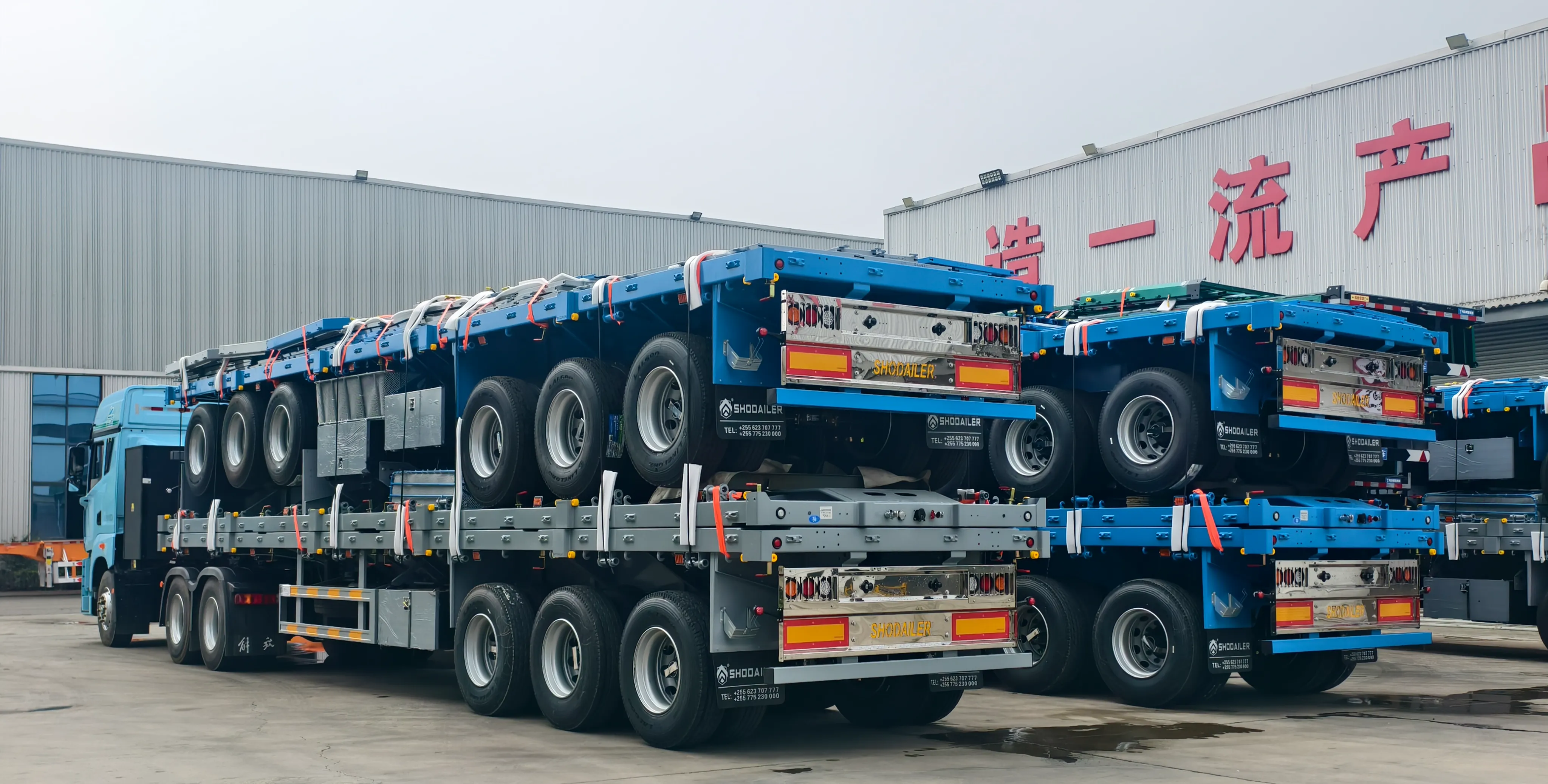
Flatbed Trailers: Flatbed trailers are essential for transporting oversized and heavy loads, such as construction materials, machinery, and vehicles. The growth of the construction and manufacturing industries, especially in emerging economies, has led to a steady demand for flatbed trailers. They offer the flexibility to carry goods that cannot be transported in enclosed trailers.
Tanker Trailers: Tanker trailers are designed for transporting liquid and gaseous substances, including fuel, chemicals, and milk. The growth of the oil and gas industry, as well as the chemical and food and beverage sectors, has contributed to the demand for tanker trailers. Stringent safety regulations in the transportation of hazardous materials have also led to the development of more advanced and safer tanker trailer designs.
3. Market Drivers
3.1 Rising E-commerce and Logistics Demand
The rapid growth of online retail has been a major driver of the semi-trailer market. E-commerce giants and third-party logistics providers are constantly looking for efficient ways to transport large volumes of goods to meet the increasing consumer demand for fast and reliable deliveries. This has led to an increased investment in semi-trailer fleets, especially dry van and refrigerated trailers. The rise of same-day and last-mile delivery services has further accelerated the need for advanced semi-trailer solutions.
3.2 Growing Industrialization and Infrastructure Development
The expansion of construction, manufacturing, and mining industries worldwide has created a significant demand for semi-trailers. Infrastructure projects require the transportation of large quantities of raw materials, such as steel, cement, and gravel, as well as heavy machinery and equipment. The growth of manufacturing industries also necessitates the transportation of finished products. In addition, the development of renewable energy projects, such as wind and solar farms, has increased the demand for specialized semi-trailers to transport large components.
3.3 International Trade Expansion
The growth of international trade has been a positive factor for the semi-trailer market. As economies become more interconnected, the need for efficient transportation of goods across borders has increased. Semi-trailers play a crucial role in international trade, especially for land-based transportation. The signing of free trade agreements and the improvement of logistics infrastructure in many countries have further facilitated the movement of goods and contributed to the growth of the semi-trailer market.
4. Challenges
4.1 High Initial Costs
The acquisition and maintenance of semi-trailers require a significant amount of capital. The high purchase price of semi-trailers, especially those with advanced features and technologies, can be a barrier for small and medium-sized enterprises (SMEs) looking to enter the market or expand their fleets. Additionally, the cost of maintenance, including repairs, replacement of parts, and regular servicing, can also be substantial.
4.2 Stringent Regulations
The semi-trailer industry is subject to a wide range of regulations, including those related to safety, emissions, and vehicle weight. Compliance with these regulations can be challenging and costly for manufacturers and operators. For example, new emissions standards may require the adoption of expensive after-treatment systems or the use of alternative fuels. Safety regulations also mandate the installation of advanced safety features, such as anti-lock braking systems (ABS) and electronic stability control (ESC), which can increase the overall cost of the semi-trailer.
4.3 Volatility in Fuel Prices
Fluctuating fuel prices can have a significant impact on the operating costs of semi-trailers. When fuel prices rise, transportation companies face higher expenses, which can eat into their profit margins. This can make it difficult for them to plan their budgets and invest in new equipment. Additionally, high fuel prices may also lead to a decrease in demand for transportation services, as customers may look for more cost-effective alternatives.
5. Competitive Landscape
The semi-trailer market is highly competitive, with a large number of players operating globally. Key players in the market include Wabash National, Schmitz Cargobull, Hyundai Translead, and CIMC Vehicles. These companies are constantly investing in research and development to introduce innovative products and technologies. They are also focusing on expanding their product portfolios, improving production efficiency, and enhancing customer service to gain a competitive edge.
Strategic partnerships, mergers, and acquisitions are common strategies in the semi-trailer market. For example, some companies may partner with technology providers to develop advanced features for their semi-trailers, such as autonomous driving capabilities or intelligent fleet management systems. Mergers and acquisitions can also help companies expand their market reach, increase their production capacity, and achieve economies of scale.
6. Future Outlook
6.1 Technological Advancements
Electric and Hybrid Semi-Trailers: With the increasing focus on environmental sustainability and the need to reduce carbon emissions, the adoption of electric and hybrid semi-trailers is expected to grow in the future. These alternative fuel vehicles offer the potential to significantly reduce fuel consumption and emissions. However, challenges such as limited driving range, high upfront costs, and the lack of a comprehensive charging infrastructure still need to be addressed.
Autonomous Driving Technology: The integration of autonomous driving technology in semi-trailers is another trend that is expected to revolutionize the transportation industry. Autonomous semi-trailers have the potential to improve safety, reduce driver fatigue, and increase operational efficiency. However, the development and implementation of this technology face regulatory, technological, and ethical challenges.
Advanced Telematics and IoT Integration: The use of advanced telematics, Internet of Things (IoT), and GPS tracking systems in semi-trailers is becoming more widespread. These technologies enable real-time monitoring of the vehicle's location, performance, and cargo status. They also facilitate predictive maintenance, route optimization, and fleet management, leading to improved efficiency and cost savings.
6.2 Market Growth Projections
The semi-trailer market is expected to continue growing in the coming years. The increasing demand for efficient freight transportation, driven by factors such as the growth of e-commerce, industrialization, and international trade, will support market expansion. Emerging economies in Asia-Pacific, Africa, and South America are likely to contribute significantly to the growth of the market as they continue to develop their infrastructure and expand their economies. However, the market growth may also be affected by factors such as economic downturns, changes in regulations, and technological disruptions.
In conclusion, the semi-trailer market is currently in a growth phase, driven by various factors such as the expansion of e-commerce, industrialization, and international trade. However, it also faces challenges such as high costs, stringent regulations, and fuel price volatility. The future of the market looks promising, with technological advancements such as electric and autonomous vehicles and the integration of advanced telematics expected to play a significant role in shaping the industry. Companies that can adapt to these changes and meet the evolving needs of customers are likely to succeed in this competitive market.