

 Home
Home



Semi - Trailer Market: Current Scenario and Future Prospects
Market Growth Trends
The global semi - Trailer market has been on a growth trajectory. In 2023, the semi - truck market size, which is closely related to the semi - trailer market as semi - trailers are towed by semi - trucks, was valued at USD 141.7 billion. It is projected to grow at a compound annual growth rate (CAGR) of over 5.2% between 2024 and 2032. The semi - trailer market itself was valued at USD 36.58 billion in 2024 and is projected to reach USD 56.44 billion by 2032, with a CAGR of 5.57% during the forecast period of 2025 to 2032.
Drivers of Market Growth
Globalization and International Trade
Rising globalization and the expansion of international trade are primary drivers of the semi - trailer market's growth. As global trade increases, the demand for efficient and reliable freight transportation solutions has intensified. Semi - trailers play a vital role in connecting ports, manufacturing hubs, and distribution centers, facilitating the seamless movement of goods across continents. For instance, new trade routes are constantly being developed, and emerging markets are investing in infrastructure. This not only enhances the demand for semi - trailers but also encourages innovation in truck design and logistics solutions related to semi - trailers.
E - commerce Boom
The rise of e - commerce and just - in - time delivery models has further underscored the need for robust transportation networks, where semi - trailers are indispensable. With the increasing popularity of online shopping, there is a greater emphasis on optimizing supply chains and enhancing freight capabilities. This has led to a higher demand for semi - trailers to manage and streamline the flow of products across longer distances. For example, as e - commerce grows, logistics companies require larger fleets of semi - trailers, especially dry van and refrigerated semi - trailers, to handle bulk shipments and perishable goods.
Industrialization and Infrastructure Development
The expansion of construction, manufacturing, and mining industries is a key driver of the semi - trailer market. In the construction sector, semi - trailers are used to transport heavy building materials. In manufacturing, they are essential for moving components and finished products. The mining industry relies on semi - trailers to transport minerals. Moreover, as infrastructure development projects, such as building new roads and improving existing ones, are carried out around the world, the conditions for semi - trailer transportation are being improved, further fueling the demand for these trailers.
Technological Advancements
Semi - trailers are witnessing significant technological advancements. The integration of advanced driver - assistance systems (ADAS) in the towing trucks and the development of smart and connected features in semi - trailers themselves are transforming the industry. For example, the use of IoT (Internet of Things) and GPS tracking in semi - trailers allows fleet operators to monitor cargo status, location, and environmental conditions in real - time. Smart sensors can track parameters like tire pressure, temperature, axle load, and brake performance, reducing the risk of accidents and unexpected breakdowns. This not only enhances safety but also improves operational efficiency and cost - effectiveness.
Market Segmentation
By Type
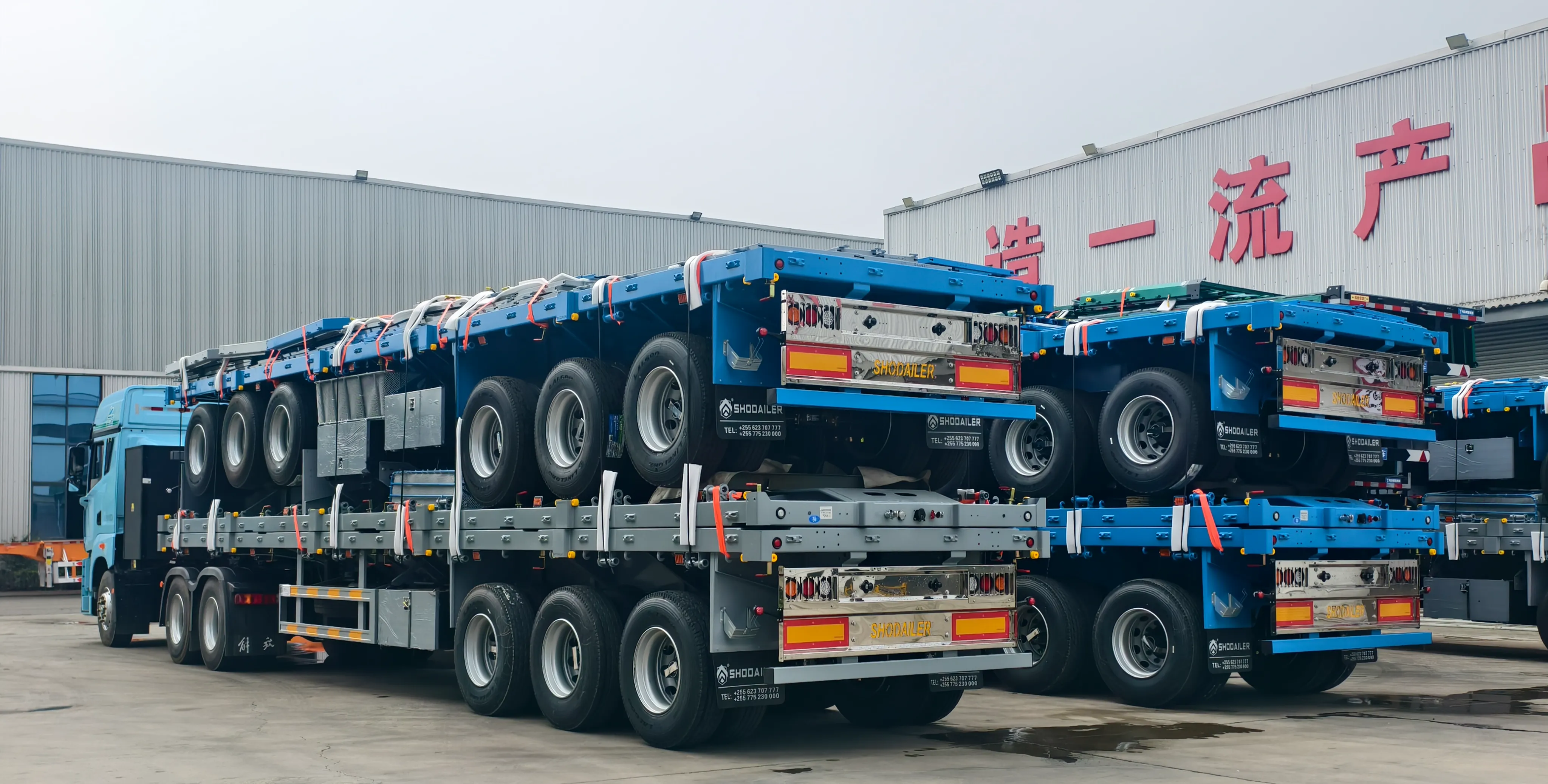
The semi - trailer market is segmented into different types. Dry van semi - trailers dominate the market. They are popular among carriers and shippers as they protect goods from bad weather and theft. The growth in retail and the rise in fast - moving consumable goods and durables (FMCG & FMCD) are driving the growth of dry vans, especially in countries like India and China. Refrigerated semi - trailers are the next widely used type. They are designed to carry goods at a specific temperature and are equipped with refrigeration systems powered by diesel engines, using carbon dioxide as a cooling agent. The expansion of the food and beverage industry and the constant rise in the demand for packed food and frozen products across major countries have led to an increase in the sale of refrigerated semi - trailers. Lowboy and flatbed semi - trailers also have substantial growth in the market, mainly due to the improvement in road connectivity and better road conditions, which are conducive to the transportation of large and heavy - load items.
By Foot Length and Tonnage
By foot length, 28 - 45 foot length semi - trailers are widely used. In terms of tonnage, the market is segmented into below 25 ton, 25 - 50 ton, 51 - 100 ton, and above 100 ton categories. Different industries and cargo requirements lead to the use of semi - trailers with different tonnage capacities.
By End - User
The semi - trailer market caters to various end - users, including the automotive, chemical, FMCG, healthcare, heavy industry, logistics, and oil and gas sectors. Each sector has its specific requirements for semi - trailers, such as the need for specialized trailers in the chemical and healthcare industries to ensure the safe transportation of hazardous and temperature - sensitive goods respectively.
Regional Analysis
North America holds the largest market share of semi - trailers. This is due to its improved road infrastructure, excellent connectivity, expansion of the truck industry, and growing construction activities. The Asia - Pacific region is projected to show significant growth in the semi - trailer market. The rapid urbanization, industrialization, rise in FMCGs and the food and beverage industry, and improved logistics in this region are driving the demand for semi - trailers. Europe is expected to show steady growth in the market, mainly because of the stringent government norms to promote fuel - efficient vehicles, which encourages the development and use of more advanced and efficient semi - trailers.
Challenges in the Market
However, the semi - trailer market is not without its challenges. Small and medium - sized businesses face a significant barrier in the form of high initial costs. Semi - trucks, which are essential for towing semi - trailers, often come with a high price tag, sometimes in the hundreds of thousands of dollars. This requires a substantial upfront investment, and in addition to the purchase price, businesses also need to consider financing, insurance, and maintenance expenses. High maintenance costs are another challenge. The complex mechanical and electrical systems in modern semi - trailers need regular and sometimes expensive maintenance to ensure optimal performance. Moreover, the presence of alternative modes of cargo transports, such as rail and sea freight in some cases, may limit the growth of the semi - trailer market.
Key Players and Their Strategies
Key players operating in the global semi - trailer market include Kögel Trailer GmbH, Hyundai Translead, Wabash National Corporation, Schwarzmüller Group, Fahrzeugwerk Bernard Krone GmbH & Co., Utility Trailer Manufacturing Company, Dorsey Trailer, Fontaine Commercial Trailer, Schmitz Cargobull, China International Marine Containers (Group) Ltd., Lambert SAS, Shandong Arima Group, and Polar Tank. These companies are constantly innovating and implementing various strategies to stay competitive. For example, some are investing in research and development to create more lightweight and fuel - efficient semi - trailers. Others are focusing on improving the quality of their products and services, such as offering better after - sales support and warranty programs.
In conclusion, the semi - trailer market has a promising future with growth expected in the coming years. However, to fully realize this potential, the industry needs to address the challenges it faces, such as high costs and competition from alternative transport modes. Through continuous innovation and strategic planning, key players in the market can position themselves to take advantage of the growing opportunities driven by globalization, e - commerce, and industrial development.