

 Home
Home



The Belt and Road Initiative Boosts Market Demand for Logistics and Transportation Machinery
Against the backdrop of the steady advancement of the Belt and Road Initiative, infrastructure development and international trade exchanges among countries along the routes have continued to deepen, driving rapid growth in demand for transportation equipment. As an essential pillar supporting the logistics system, transportation facilities such as semi-Trailers and heavy-duty trucks are embracing a new round of development opportunities, and the overall prosperity of the industry keeps rising steadily.
In recent years, countries participating in the Belt and Road cooperation have significantly increased investment in highways, railways, ports and other infrastructure sectors. Emerging markets represented by Southeast Asia, Africa and Central Asia have witnessed a rapid release of demand for engineering transportation, logistics distribution and cross-border freight services. These regions generally have relatively weak industrial foundations and rely heavily on imported transportation equipment, thereby creating broad market potential for Chinese manufacturing enterprises.
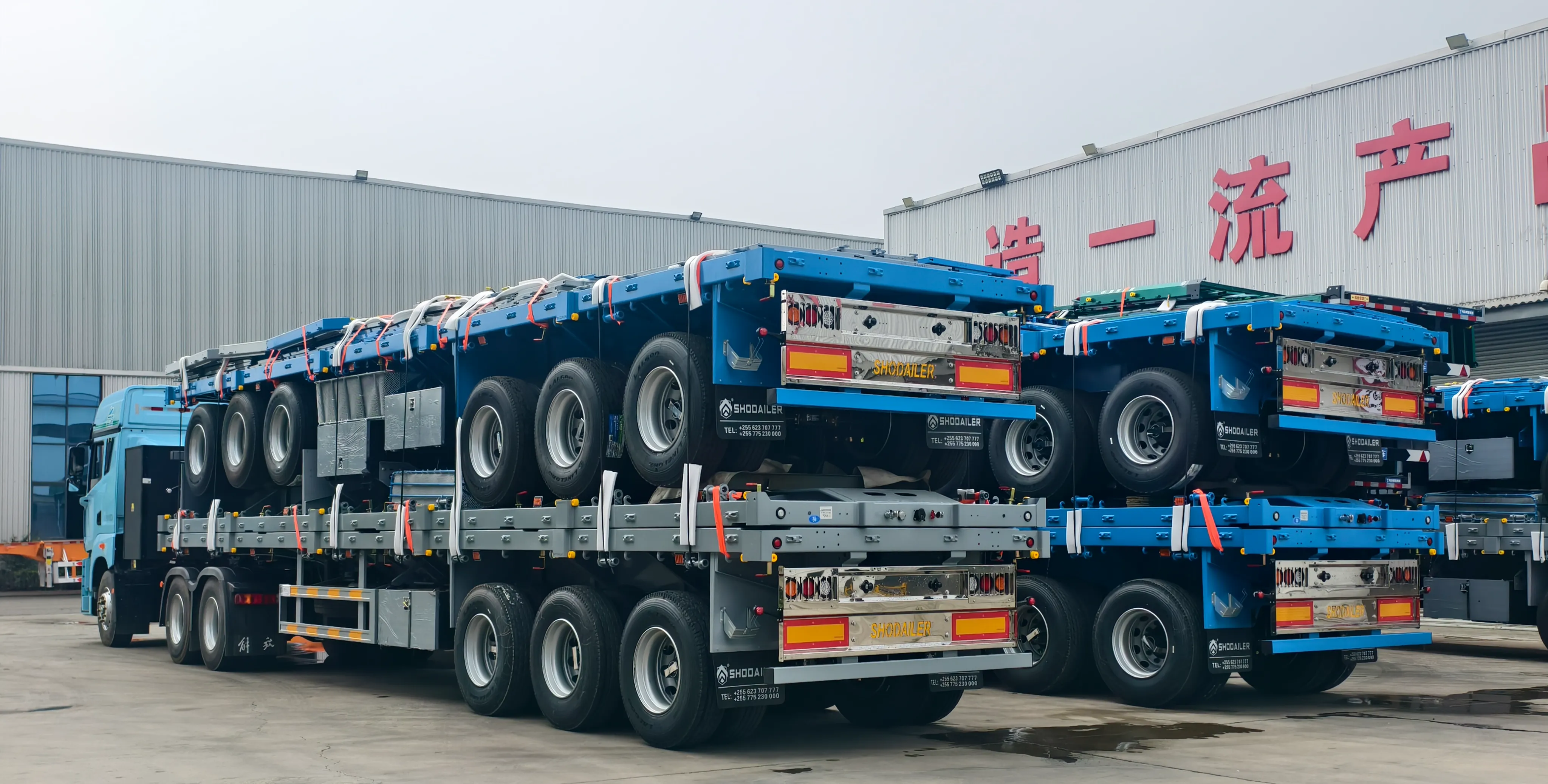
At the same time, Chinese manufacturers of transportation machinery have accelerated their pace of “going global”, engaging deeply in international competition through multiple models including complete vehicle exports, KD assembly production, and localized factory establishment. Taking semi-trailers as a typical example, thanks to outstanding cost-performance advantages and a mature manufacturing supply chain, Chinese-made products have achieved continuously growing market shares across African and Southeast Asian regions. Many enterprises have also established long-term partnerships with local distributors and logistics companies to optimize after-sales service networks comprehensively and enhance global brand recognition and reputation.
Notably, as the Belt and Road construction enters a stage of high-quality development, market requirements for transportation equipment are also undergoing continuous upgrading. On the one hand, environmental protection standards worldwide have become increasingly stringent, promoting the pilot application of new energy heavy trucks and electric semi-trailers in multiple countries. On the other hand, intelligent operation technology and lightweight structural design have gradually become core competitive focuses within the industry, while improving transport efficiency and reducing overall operating costs have turned into the primary demands of end users.
Furthermore, fluctuations in international oil prices, exchange rate variations and adjustments of global trade policies also exert certain influences on the export business of transportation equipment. Industry insiders point out that while actively exploring overseas markets, enterprises must strengthen risk control mechanisms and build stronger localized operational capabilities so as to cope with the complex and volatile international business environment effectively.
Overall, the Belt and Road Initiative has not only expanded the global market boundary for transportation equipment, but also driven the entire industry toward high-end upgrading, intelligent innovation and green low-carbon transformation. In the future, with continuous improvements in regional connectivity and interoperability across related areas, market demand for logistics transport vehicles will maintain steady growth, and the comprehensive competitiveness of Chinese enterprises within the global industrial chain and supply chain is expected to be further strengthened comprehensively.

