Light-duty
Trailers dominate Uzbekistan’s market, primarily used to transport cash crops (cotton, wheat, fruits, vegetables) from rural farming regions (Fergana Valley, Samarkand, Bukhara) to processing facilities, grain elevators, and export hubs. As one of the world’s top 5 cotton exporters, Uzbekistan relies on these trailers to move 70% of its cotton yield—over 3.5 million tons annually—from Fergana Valley’s fertile fields to textile mills in Tashkent and export terminals in Termez. Additionally, the country’s growing horticulture sector (grapes, melons, apricots) drives demand for light-duty trailers with protective covers to preserve fresh produce during transport.
Medium-duty trailers support cross-border trade between Uzbekistan and EAEU partners (Russia, Kazakhstan) as well as BRI partners (China, Pakistan), transporting consumer goods, automotive parts, and agricultural machinery. They also manage regional freight between major cities (Tashkent, Samarkand, Bukhara, Namangan), ensuring the smooth flow of goods for local retail and manufacturing. With cross-border trade volume reaching $42 billion in 2023 (a 21% year-on-year increase), demand for medium-duty trailers grew by 17.2% in the same year—particularly for models adapted to the Tashkent-Almaty (Kazakhstan) and Tashkent-Termez (Afghanistan border) routes.
Heavy-duty semi-trailers are mainly used to transport construction materials (cement, steel, asphalt) for large-scale infrastructure projects, as well as bulk mining products (gold, uranium, natural gas equipment) from mining regions (Navoi, Bukhara) to processing plants. Uzbekistan’s $15 billion “Infrastructure Modernization Program 2023–2027” (focused on road, rail, and airport upgrades) has driven a 20% surge in heavy-duty trailer demand in 2023, with the Tashkent-Nukus Highway expansion and Samarkand International Airport renovation being key drivers.
Approximately 80% of operational trailers are imported (primarily from Russia, China, and Turkey), with 65% being used units (aged 7+ years) due to budget constraints among local small and medium-sized enterprises (SMEs). This creates critical pain points: frequent breakdowns of old trailers in rural and remote areas, poor adaptability to Uzbekistan’s hot, dry summers (up to 45°C) and cold winters (down to -20°C), and long lead times for spare parts (3–4 months for European imports). These gaps present significant opportunities for brands like Shodailer that offer durable, climate-adapted, and locally supported new trailers.
Agriculture contributes 28% of Uzbekistan’s GDP and 30% of exports, with recent policy shifts (e.g., liberalizing cotton farming) driving light-duty trailer demand:
- Cotton Exports: Uzbekistan’s cotton exports reached $2.1 billion in 2023 (up 18% year-on-year), requiring 60,000+ light-duty trailer trips to transport cotton from Fergana Valley to Tashkent’s textile mills and Termez’s border export hubs.
- Grain & Horticulture: Wheat exports grew by 15% to 3.2 million tons, while fruit exports (grapes, apricots) rose by 22%—boosting demand for light-duty trailers with moisture-resistant beds and UV-protective covers to prevent spoilage.
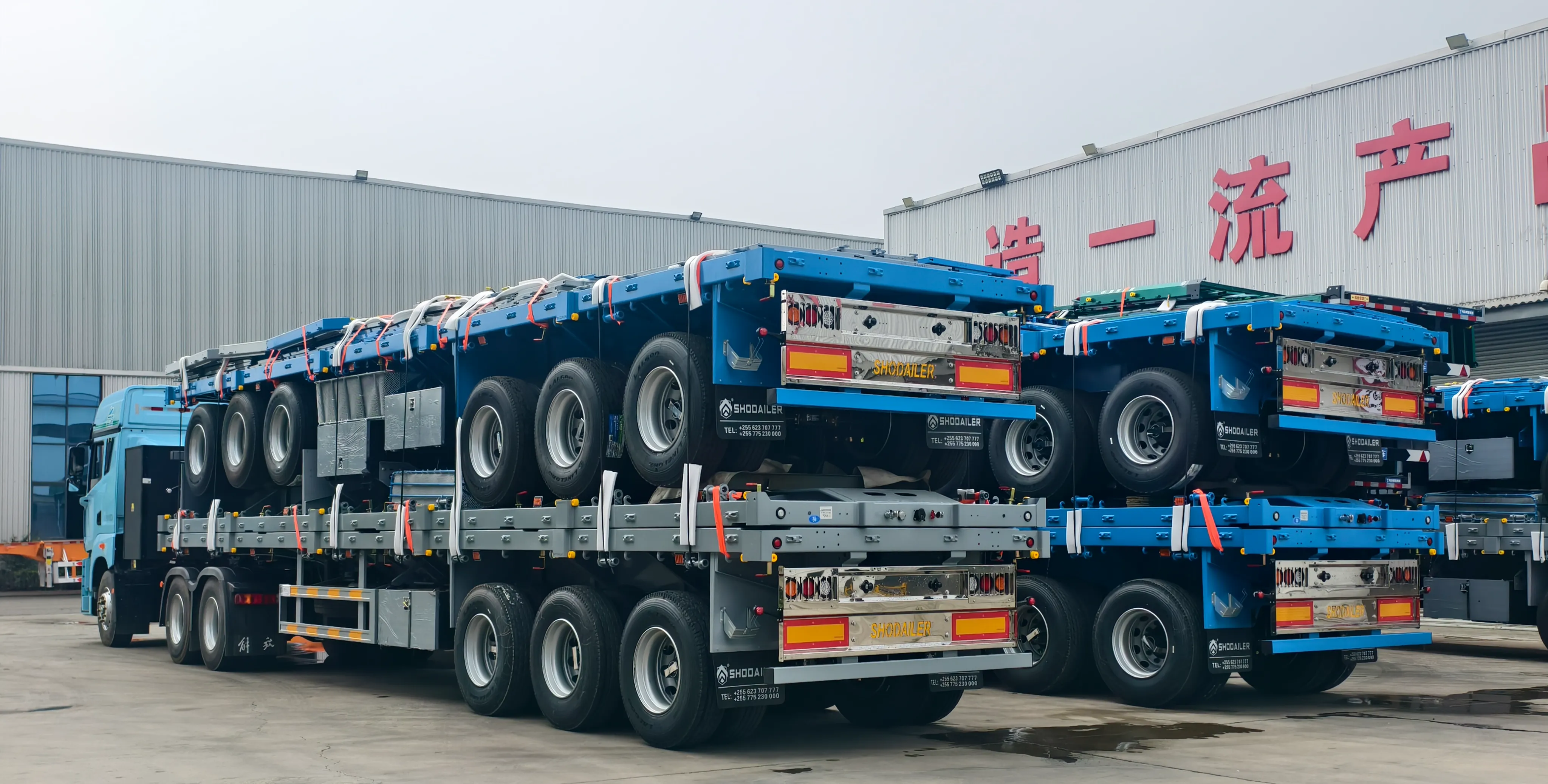
Shodailer’s light-duty agricultural trailers are engineered to meet Uzbekistan’s crop transport needs:
- Cotton-Specific Design: Reinforced side rails and anti-slip floors prevent cotton bales from shifting during transport, reducing damage rates by 35% compared to old used trailers. Optional waterproof, breathable covers protect bales from rain and dust—critical for preserving cotton quality for export.
- Heat & UV Resistance: UV-protected paint and heat-resistant tires withstand Fergana Valley’s 45°C summer temperatures, avoiding tire blowouts and paint fading that shorten trailer life.
- Affordability & Accessibility: Priced 22% lower than Turkish light-duty models, with flexible 4-year installment plans (5% interest) in partnership with local banks—tailored for cash-strapped farming cooperatives.
A Fergana Valley cotton farmer cooperative manager said: “Shodailer’s trailers cut our cotton damage rate from 15% to 5%—that’s $100,000 saved annually. The heat-resistant tires never blow out in summer, and the installment plan let us replace 5 old trailers without draining our budget.”
Uzbekistan’s strategic role as a Eurasian transit hub has spurred cross-border trade growth, driving medium-duty trailer demand:
- China-Uzbekistan Trade: The Khorgos-Almaty-Tashkent corridor (BRI’s key Central Asian route) handled 4.5 million tons of cargo in 2023 (up 25% year-on-year), requiring 120+ medium-duty trailers to transport electronics, textiles, and machinery from China to Tashkent and Samarkand.
- EAEU & South Asian Trade: Trade with Russia grew by 19% (focused on automotive parts and fertilizers), while trade with Pakistan (via Termez) rose by 23%—boosting demand for medium-duty trailers with adjustable cargo racks to handle mixed loads and rugged suspensions for unpaved border roads.
Shodailer’s medium-duty cross-border semi-trailers are tailored to Uzbekistan’s transit logistics needs:
- Rugged Terrain Adaptability: Reinforced suspensions and all-terrain tires handle unpaved sections of the Tashkent-Termez route and mountainous stretches of the China-Kazakhstan-Uzbekistan corridor, reducing breakdowns by 50% compared to generic models.
- EAEU & BRI Compliance: Equipped with EAEU TR CU certification, GPS tracking, and multilingual customs documentation systems, cutting border clearance time at Khorgos and Termez by 40%—critical for meeting tight delivery schedules.
- Fuel Efficiency: Lightweight high-strength steel construction reduces fuel consumption by 16%, a major cost-saving for long cross-border trips (e.g., Tashkent to Khorgos, 1,800 km) amid Uzbekistan’s high diesel prices (≈UZS 12,000 per liter in 2023).
A Tashkent-based cross-border logistics firm owner said: “Shodailer’s trailers handle the bumpy Termez border road like it’s a highway—we used to have 2 breakdowns a month with our old Russian trailers. Fuel savings add up to UZS 30 million per trailer annually, and faster customs clearance lets us take more trips.”
Uzbekistan’s “Infrastructure Modernization Program 2023–2027” is investing $15 billion in roads, railways, and airports, driving heavy-duty trailer demand:
- Road Upgrades: The Tashkent-Nukus Highway (1,200 km) expansion requires 90+ heavy-duty Dump Trailers to transport gravel and asphalt, while the Samarkand-Bukhara Expressway needs 70+ flatbed trailers for steel beam transport.
- Airport & Industrial Projects: Samarkand International Airport’s new terminal (2024 completion) and Navoi Free Industrial Zone’s manufacturing hubs need 80+ heavy-duty trailers to move construction machinery and industrial equipment.
Shodailer’s heavy-duty dump and flatbed trailers meet Uzbekistan’s infrastructure project requirements:
- High Load Capacity: Dump trailers can carry up to 35 tons of gravel/asphalt, with hydraulic lifting systems that unload in 2 minutes—cutting on-site waiting time by 50%. Flatbed models handle 40-ton steel beams, with reinforced decks to prevent bending under heavy loads.
- Durability in Extreme Climates: Anti-corrosion coatings protect against Navoi’s desert dust and Samarkand’s summer humidity, extending trailer life by 35% compared to standard models. Cold-resistant components (batteries, fluids) ensure reliable performance in Bukhara’s -20°C winters.
- Easy Maintenance: Modular component design allows local mechanics to repair trailers without specialized tools, reducing downtime from 2 weeks (for imported parts) to 3 days.
A construction manager at the Tashkent-Nukus Highway project said: “Shodailer’s dump trailers unload asphalt 3x faster than our old ones—we’re ahead of schedule for the first time. Their dust-resistant design means we only service them once a month, not once a week.”
Uzbekistan’s hot, dry summers, cold winters, and desert dust pose major challenges for generic trailers. Shodailer addresses this with:
- Summer Heat Protection: Heat-dissipating brake systems, silica-based tires (resistant to 45°C), and insulated wiring prevent overheating and electrical failures.
- Winter Readiness: Heated fuel lines, cold-resistant batteries (-30°C rated), and snow guards on trailer roofs ensure operation in northern Uzbekistan’s harsh winters.
- Dust & Sand Resistance: Sealed air filters, rubber gaskets on cargo doors, and dust shields on axles keep desert sand out of mechanical components—reducing maintenance costs by 40%.
Shodailer ensures seamless market access by meeting strict standards:
- Certifications: Obtained EAEU TR CU certification (mandatory for cross-border transport), ISO9001 quality certification, and Uzbekistan’s GOST-U certification for safety and environmental compliance.
- Localization Adjustments: Offers right-hand drive configurations (standard in Uzbekistan), Uzbek-language user manuals, and compliance with local weight limits (up to 40 tons for heavy-duty trailers on national highways).
- Customs & Documentation Support: Partners with Tashkent-based logistics firms to handle import clearance, reducing delivery time from 6 weeks (standard imports) to 10 days—critical for urgent infrastructure projects.
To address Uzbekistan’s spare parts shortages and maintenance gaps, Shodailer has built a targeted local support network:
- Service Centers: Opened two 24/7 service centers in Tashkent and Samarkand—covering the country’s key logistics and agricultural hubs—staffed with Uzbek-speaking technicians trained in Shodailer’s trailer maintenance.
- Spare Parts Depots: Established a central spare parts depot in Tashkent (stocking 300+ common parts: brakes, tires, hydraulic components) and regional depots in Fergana (agricultural region) and Navoi (mining/infrastructure hub), ensuring 72-hour delivery for urgent repairs.
- On-Site & Training Support: Offers mobile maintenance teams for rural farms and remote construction sites, and joint training programs with the Uzbekistan Logistics Association to train 60+ local mechanics annually.
A Fergana-based agricultural logistics manager said: “Shodailer’s mobile team fixed our trailer on-site in 5 hours—we used to wait 2 weeks for a technician from Tashkent. Their Fergana depot had the spare tire we needed shipped in 1 day. It’s like having a mechanic next door.”
By 2025, Uzbekistan’s trailer market is projected to grow to Uzbekistani Som (UZS) x, with a 10.5% compound annual growth rate (CAGR). Key trends and Shodailer’s strategic focus include:
- Uzbekistan’s plan to expand high-value horticulture (grapes, organic cotton) will drive demand for 150+ light-duty refrigerated trailers to transport fresh produce to EU and Middle Eastern markets. Shodailer will launch a solar-powered refrigerated light-duty trailer to address rural power shortages.
- The new China-Kyrgyzstan-Uzbekistan Railway (scheduled for 2025 completion) will boost container transport, driving demand for 130+ medium-duty Container Trailers. Shodailer will expand its medium-duty range to include 40ft container-compatible models with enhanced EAEU/BRI compliance.
- Uzbekistan’s $5 billion Tashkent Metro expansion and Bukhara International Airport renovation will need 120+ heavy-duty flatbed and dump trailers. Shodailer will introduce a lightweight heavy-duty trailer (10% lighter than standard models) to improve fuel efficiency for long-haul infrastructure transport.
For businesses seeking durable, climate-adapted, and locally supported trailer solutions in Uzbekistan, Shodailer offers:
- Product range: Light-duty agricultural trailers (cotton/grain/fresh produce), medium-duty cross-border trailers, heavy-duty infrastructure dump/flatbed trailers, and custom refrigerated units.
- Local support: 24/7 service centers in Tashkent/Samarkand, 72-hour spare parts delivery, Uzbek-speaking technical teams, and mobile maintenance for rural/remote regions.
- Competitive pricing: New trailers start at UZS 45,000,000 (light-duty) — 18–25% lower than European and Turkish brands, with flexible payment plans for SMEs.
Contact Shodailer today:
- WhatsApp: +86 19015490301
- Email: info@shodailer.com
Shodailer is committed to supporting Uzbekistan’s logistics sector with tailored solutions—empowering agricultural exports, cross-border trade, and infrastructure development, while aligning with the country’s “Uzbekistan 2030” development goals.


 Home
Home